Notes on Jerry and Joe – Episode 6
The main sources for the episode included:
- Brad Ricca, Super Boys – The Amazing Adventures of Jerry Siegel and Joe Shuster, the Creators of Superman (2013, St. Martin’s Press)
- Gerard Jones, Men of Tomorrow – Geeks, Gangsters and the Birth of the Comic Book (2004, Basic Books)
- Helene Stapinski and Bonnie Siegler, The American Way – A True Story of Nazi Escape, Superman and Marilyn Monroe (2023, Simon & Schuster)
- Jerry Siegel, Creation of a Superhero (unpublished autobiography, circa 1980)
- Craig Yoe, Secret Identity – The Fetish Art of Superman’s Co-Creator Joe Shuster (2008, Abrams ComicArts)
- Virginia Sheward, “‘Blackball’ spells hunger strike for plump father of Superman”, Newsday, November 30, 1951
- Thomas Collins, “A ray of hope for Superman’s creators”, Newsday, December 10, 1975
- Victoria Graham, “Superman’s creators appeal for help”, Associated Press, December 25, 1975
- Elliot S. Maggin, “How a real hero saved the mild-mannered creators of Superman”, The Village Voice, January 19, 1976
- Bruce Blackadar, “His Superman flew, but he’s now down and out”, Toronto Star, December 26, 1978
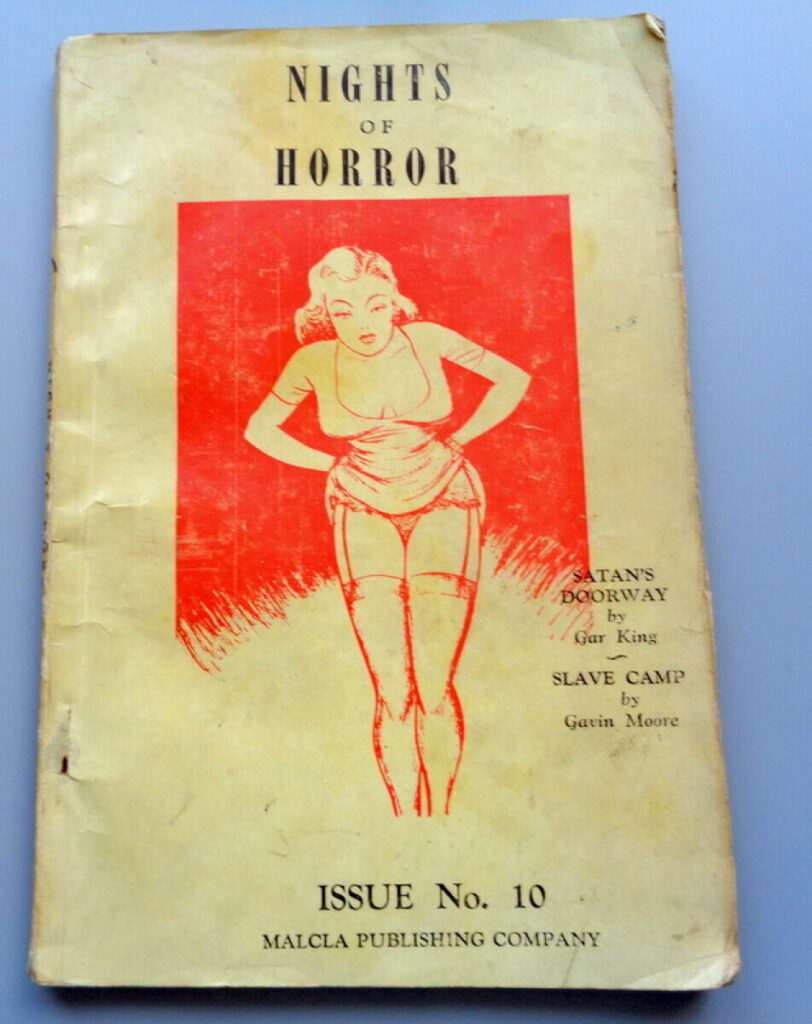
Much of the correspondence cited in this episode weren’t held by Jerry Siegel and used in his court cases. (As was the case for much of the correspondence from the 1940s). This mostly came from an auction of papers that were held by someone close to an executive at National Comics Publications, as DC comics was called back then. They included:
- A letter Jerry Siegel circulated to Jack Liebowitz’s neighbours in Great Neck, Long Island
- A letter Jerry Siegel sent to the head bartender at Huttons, a bar on Lexington Avenue, near National Comics’ offices
- A letter Jerry Siegel sent about DC/National’s owners, Donenfeld, Liebowitz and Sampliner, which included the executives’ home addresses
- Jerry’s letter putting a curse on Harry Donenfeld
- A signed postcard from Jerry putting forth his services to the advertising industry. (The fact this is part of this auction, suggests the recipient at an ad agency passed it on to the executives at National!)
- Jerry’s letter to Jack Liebowitz that contained white powder (which turned out to be corn starch) which includes the lab report
- Joanne Siegel’s letter to Jerry’s former bosses, written before the white powder letter but I maintain might have been what saved the day
- The infamous “red letter”, the writer of which is unknown but the auction house attributes to Harry Donenfeld but I maintain is Jack Liebowitz
- Jerry’s 1953 letter to Harry Donenfeld about his multiple depositions in Fawcett Publications settlement with DC/National
- Jerry’s heartbreaking Father’s Day letter to Harry Donenfeld
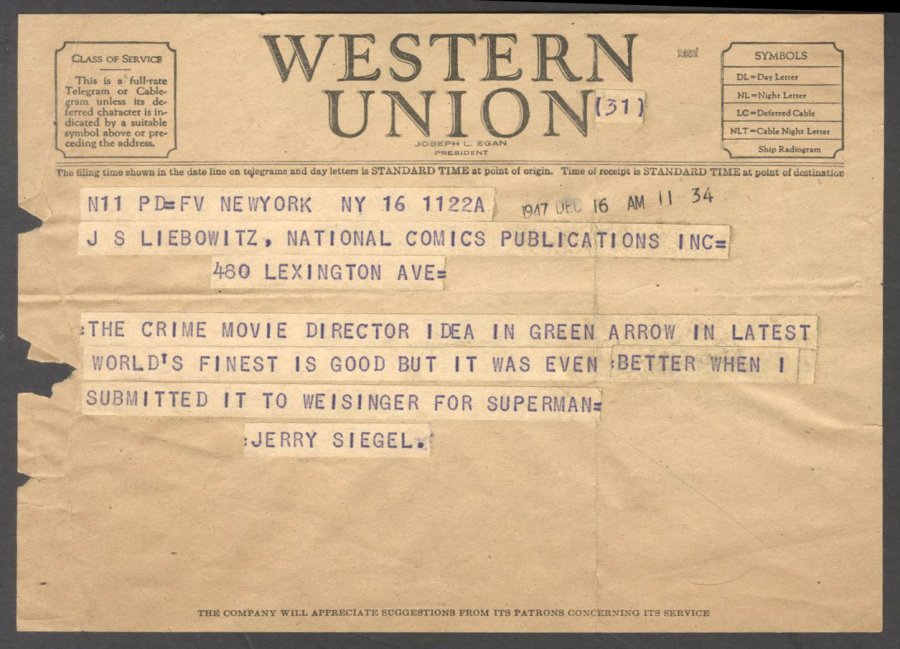
There are a couple of letters I have missed. There were a few I didn’t get onto the episode including this sick burn of a telegram Jerry sent (when he was clearly more flush with cash and could afford to send a telegram) to Jack Liebowitz in December 1947…
A lot of the things in this episode came to light while we were mixing down the episode and I would have to drop in new narration. The penultimate item we dropped into the episode happened when Marvel executive editor Tom Breevoort posted on his fabulous website (which is recommended weekend reading) The Joe-Shuster illustrated Invisible Boy story that is apparently Siegel and Shuster’s final work together. I have to be honest and say that while the art is definitely Joe’s, I have no idea how Tom, or the Grand Comics Database for that matter, comes up with Jerry as a writer, though I think it’s true.
(The final drop-in we made was a substantial one, when I found the 1975 Newsday article cited above where Joe Shuster not only says on record Jack Liebowitz intercepted him at the DC Comics office, and also has a lengthy quote from Liebowitz about it!)
If you’re keen on reading Funnyman, or Jerry’s Ziff-Davis work, or Invisible Boy or even obscurities like Nature Boy, you should check out the Comic Book Plus website, which has digital copies of public domain comics from lots of failed publishers from years gone by.